
Where Can You Buy Organic Skincare Online?
Last Updated: November 24, 2026
Quick Summary
To buy organic skincare online in the UK, check the certifier’s name and licence number on the product page, confirm the product on the certifier’s own database, and read the full INCI list rather than the marketing description. This five-minute check separates buying organic skincare from buying the word organic.
- Certified organic means independently verified against a standard such as COSMOS, with an audit trail behind the claim.
- Natural and organic are not protected in the same way, so a product can be labelled natural with no certification.
- Patch test anything new on the inner forearm for 48 hours and introduce one product at a time.
- Introduce one new product per fortnight and keep the routine stable for at least six weeks before judging results.
- A simple routine is cleanse, treat, moisturise and protect, with broad-spectrum SPF every morning all year.
Table of Contents
- Trusted Places to Buy Organic Skincare Online
- Organic Skincare Ingredients: What the Labels Really Mean
- Natural vs Organic Skincare: Spotting the Difference
- Building an Organic Skincare Routine That Works
- Frequently Asked Questions
Trusted Places to Buy Organic Skincare Online
If you want to buy organic skincare online in the UK, first sort out what “organic” means on a label.
At Heather & Rose Health Shop in Watford, we help customers cut through this confusion. Our independent store stocks organic skincare alongside supplements and herbal remedies, and the questions are often the same: is it certified, is it vegan, will it irritate sensitive skin, and what if it doesn’t suit me.
What most buying guides skip is verification. A page can call itself an organic collection without every item being certified. Before you add to basket, check the certifier’s name and licence number on the product page, confirm the product on the certifier’s own database, and read the full INCI list rather than the marketing description. That five-minute check separates buying organic skincare from buying the word “organic”.
Organic Skincare Ingredients: What the Labels Really Mean
Organic skincare ingredients are plant-derived ingredients grown and processed to a certified standard, with restrictions on synthetic fertilisers, pesticides and processing methods. Certification sets the threshold; the label alone does not.
- Certified organic: independently verified against a standard such as COSMOS, with an audit trail behind the claim
- Botanical and plant-based: ingredients derived from plants, but not necessarily grown organically
- Mineral ingredients: clays, zinc oxide and similar, which are inorganic by definition and cannot be “organic”
- Natural: a broad, largely unregulated word that says nothing about farming or processing
- Clean beauty: a marketing term with no agreed definition or certifying body
Ingredient transparency matters more than front-of-bottle wording. Look for the stated percentage of organic ingredients, the certifier’s logo, and a full ingredient list in descending order of concentration. A product listing its organic percentage and certifier is verifiable; one listing neither is asking you to take its word.
Here is what the common label terms actually mean before you buy.
| Label term | What it means | Key point |
|---|---|---|
| Certified organic | Verified against a standard such as COSMOS, with an audit trail | Independently checked claim |
| Botanical and plant-based | Ingredients derived from plants | Not necessarily grown organically |
| Mineral ingredients | Clays, zinc oxide and similar | Inorganic by definition, cannot be organic |
| Natural | Broad, largely unregulated word | Says nothing about farming or processing |
| Clean beauty | Marketing term with no agreed definition | No certifying body |
Natural vs Organic Skincare: Spotting the Difference
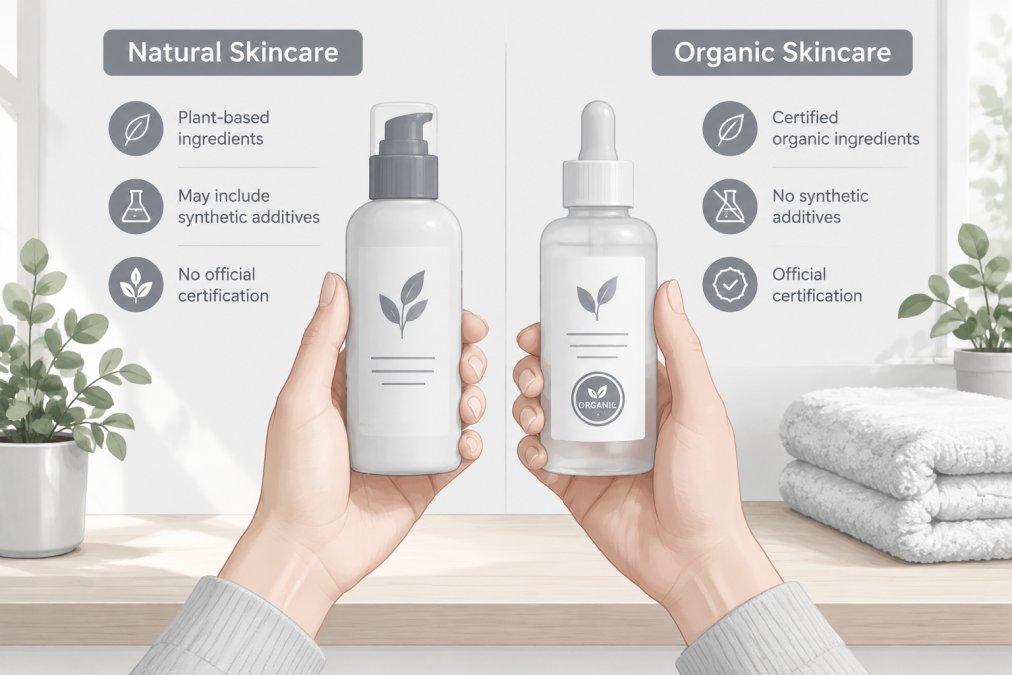
Natural skincare uses ingredients from nature; organic skincare uses ingredients grown and processed to a certified organic standard. Every certified organic product is natural, but most natural products are not certified organic.
That gap is where money gets wasted. A cream can be 100% natural and still contain plant ingredients grown with pesticides. It can also be natural and still irritate sensitive skin, since essential oils, fragrances and some botanical extracts are common triggers regardless of farming method.
For sensitive skin, patch test anything new on the inner forearm for 48 hours, introduce one product at a time, and favour short ingredient lists over long botanical blends. Fragrance-free beats “naturally fragranced” when your skin reacts easily. If you’re weighing up a specific vegan brand, our guide to whether Eco Natural Products is a good vegan skincare choice walks through what to check.
Watch out: “natural” and “organic” aren’t protected in the same way, so a product can be labelled natural with no certification behind it. If certification is what you’re paying for, verify it rather than assume it.
Building an Organic Skincare Routine That Works
An organic skincare routine is a simple cleanse, treat, moisturise and protect sequence built from certified products suited to your skin type. Four steps, done consistently, beat ten products used occasionally.
- Cleanse: a gentle, fragrance-free cleanser morning and evening
- Treat: one targeted product for your main concern, such as hydration or uneven tone
- Moisturise: a moisturiser matched to whether your skin runs dry, oily or combination
- Protect: broad-spectrum SPF every morning, all year
Introduce one new product per fortnight so you can tell what’s working. Keep the routine stable for at least six weeks before judging results, and give sensitive skin longer.
Our curated organic skincare selection includes vegan and gluten-free options alongside the supplements and herbal remedies our customers rely on. If you’re local to Watford town centre, you’re welcome to visit us. If you’re ordering online, our team is happy to answer questions about ingredients and suitability before you buy.
Sorting the certified from the merely natural takes a few minutes per product, and it’s the difference between a routine that works and a shelf of half-used bottles. Heather & Rose Health Shop stocks a curated range of organic, vegan and cruelty-free skincare, backed by an experienced team who will check ingredients and suitability with you before you commit. Get started with Heather & Rose Health Shop and build a routine your skin can actually settle into.
Frequently Asked Questions
How can I tell if skincare is genuinely organic?
Look for a recognised certification logo on the packaging, such as COSMOS Organic, which requires at least 95% organic ingredients in the total product. A brand calling itself organic without a certification mark is making a marketing claim, not a verified one. Check the ingredients list too: water is often the first ingredient, so look at what follows it. If you are unsure, ask the retailer directly which certifying body approved the product.
Is organic skincare suitable for sensitive skin?
It can be, but organic does not automatically mean gentle. Essential oils and botanical extracts, even certified organic ones, can irritate reactive skin. Patch test any new product on your inner arm for 48 hours before applying it to your face. Look for short ingredient lists, fragrance-free formulas, and products labelled for sensitive skin. If a product stings or turns your skin red, stop using it regardless of its certification.
What is the difference between natural and organic skincare?
Natural means ingredients come from plants, minerals, or other natural sources, but there is no legal standard governing the word. Organic refers to how those ingredients were farmed, without synthetic pesticides or fertilisers, and is verified through certification schemes like COSMOS. A product can be natural without being organic. When comparing natural vs organic skincare, treat organic as the stricter, verifiable claim and natural as a broader descriptive term.
