
How to Choose Supplements for Energy: A Practical Guide
Last Updated: November 10, 2026
Quick Summary
The best way to learn how to choose supplements for energy is to start with a symptom diary, then check for a real nutrient shortfall before buying anything. Persistent tiredness with warning signs needs a GP appointment first. Supplements only help if your intake is genuinely low.
- Track when tiredness hits, what you eat, and how you sleep for a week before buying anything.
- Ask your GP for a full blood count and ferritin test before taking iron, if you suspect low iron.
- Read the elemental iron figure on the label, not the total salt weight of the tablet.
- Avoid magnesium oxide; citrate is the form chosen for absorption in the article’s example.
- Give a single supplement about three months before judging whether it has worked.
Table of Contents
- Start With a Symptom Check, Not a Supplement
- The Best Vitamins for Energy and What the Evidence Says
- Iron Supplements for Low Energy: Who Actually Needs Them
- How to Check Supplement Quality Before You Buy
- How Long Does It Take for Supplements to Work?
- Bring Your Shortlist to Heather & Rose for a Personal Check
- Frequently Asked Questions
Start With a Symptom Check, Not a Supplement
Most people who want to know how to choose supplements for energy start in the wrong place: the shelf. Start with a symptom diary instead. Tiredness that lifts after a meal, worsens in winter, or follows poor sleep points to different causes, and only some are nutritional.
A week of tracking energy is a useful starting point before choosing anything: note when tiredness hits, what you ate, how you slept, and whether rest helps. That pattern beats any product claim.
Signs Your Tiredness May Be Nutritional
- Breathlessness on stairs or pale skin: possible low iron, especially if you menstruate or eat little red meat.
- Tiredness that worsens in winter: possible low vitamin D.
- Muscle cramps, twitches or poor sleep: possible low magnesium.
Watch out: persistent fatigue that lasts more than a few weeks, or comes with weight loss or night sweats, needs a GP appointment, not a supplement.
If you are still at the comparing stage, our guide on how to choose the best natural supplements for energy walks through the main options in more depth.
The Best Vitamins for Energy and What the Evidence Says
The best vitamins for energy are the ones correcting a genuine shortfall. No supplement manufactures energy from nothing; B vitamins and minerals help your body convert food into usable fuel. If your dietary intake is already adequate, adding more rarely produces a noticeable lift.
B12, B6 and the B Group
B vitamins sit at the centre of energy metabolism. B12 and B6 support red blood cell formation and oxygen transport, so a shortfall shows up as tiredness.
For a B-complex, the Terranova B-Complex with Vitamin C combines the full B group with a food-based complex. If B12 is your specific concern, Terranova Vitamin B12 500ug gives a focused daily dose, one capsule with food.
Vitamin D, Magnesium and Iron
Vitamin D supports normal muscle function, and low levels are common in northern winters. Magnesium contributes to normal energy-yielding metabolism and helps reduce tiredness. Iron carries oxygen in red blood cells; low iron is one of the most common nutritional causes of fatigue, particularly in women.
For magnesium, Lamberts MagAsorb uses a citrate form chosen for absorption. A common mistake is buying magnesium oxide because it looks cheaper per tablet; it is also the form most likely to loosen the bowel.
Iron Supplements for Low Energy: Who Actually Needs Them
Iron is the nutrient most often reached for by tired people and most often taken unnecessarily. Iron supplements for low energy help only if your stores are genuinely low; taking iron when ferritin is fine does nothing for energy and commonly causes constipation, nausea and dark stools.
Who should ask for a test first
Ask your GP for a full blood count and a ferritin test before buying anything if you recognise yourself in any of these groups:
- You menstruate heavily or have done for several cycles. Heavy periods are the most common cause of low iron in women of childbearing age.
- You are pregnant or planning a pregnancy. Iron needs rise sharply, and your midwife or GP will usually arrange monitoring.
- You follow a vegan or vegetarian diet. Plant iron is less readily absorbed than the haem iron in meat, so stores can drift down over years.
A ferritin result needs interpreting, not just reading. Ferritin rises with inflammation, so a normal figure during illness can mask low stores; your GP may also check transferrin saturation and mean cell volume.
Watch out: iron deficiency can be the first sign of bowel disease or bleeding in the gut, particularly in men and in women past the menopause. That is a reason to see your GP rather than to buy a supplement.
Choosing a form and dose if your GP agrees
If a test confirms low iron and your GP is happy for you to supplement, the practical decisions are dose, form and timing.
- Dose. Over-the-counter iron usually provides 14 mg to 20 mg of elemental iron per tablet; higher-strength products are best used under medical supervision. Read the elemental iron figure, not the salt weight, ferrous fumarate 200 mg supplies roughly 65 mg elemental iron, ferrous gluconate 300 mg around 35 mg.
- Form. Ferrous sulfate, fumarate and gluconate are well absorbed but more likely to upset the stomach. Gentler options include iron bisglycinate and iron with vitamin C. Terranova Easy Iron 20mg Complex pairs iron with vitamin C and rose hips to support absorption.
- Timing. Take iron with food if it upsets your stomach, or on an empty stomach if tolerated. Avoid tea, coffee, calcium supplements and antacids within an hour of the dose; vitamin C-rich food or orange juice improves uptake.
If iron is not your issue, the next section explains how to judge whether any product on the shelf is worth the money.
How to Check Supplement Quality Before You Buy
How to check supplement quality comes down to four things: the label, the dose, the nutrient form, and independent testing. A long ingredient list means little if the amounts are too small to matter or the batch was never tested.
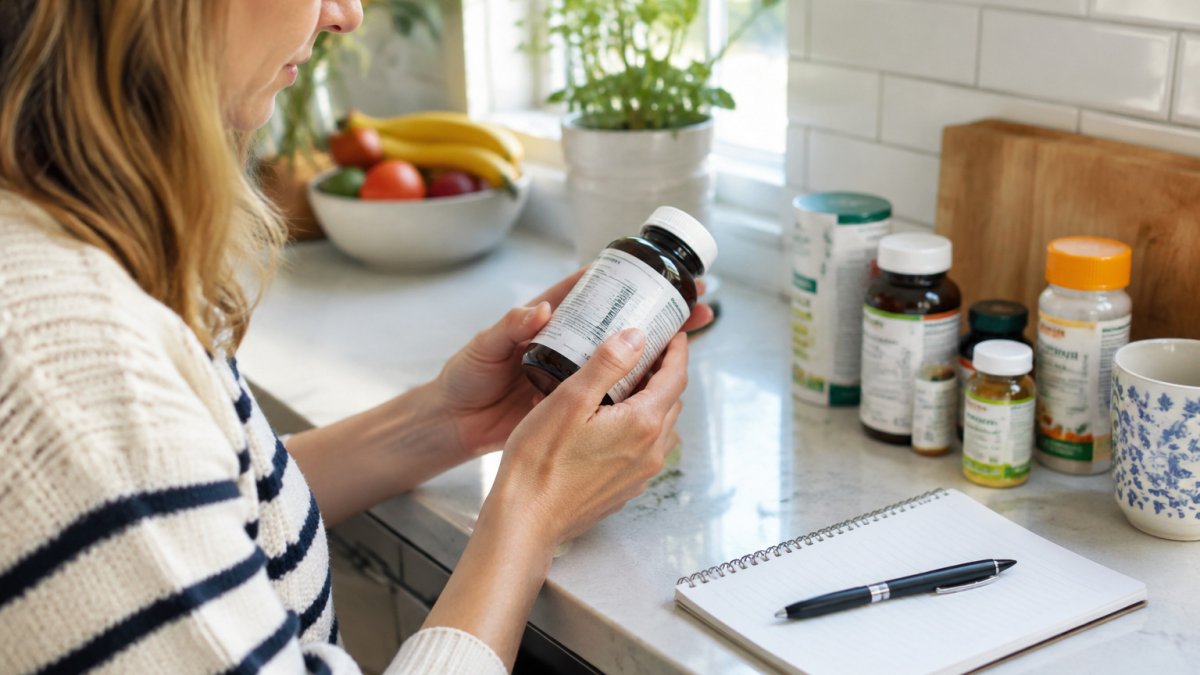
[IMAGE: Close-up of a woman’s hands turning a supplement bottle to read the ingredients label in a bright kitchen, a notebook and pen on the counter beside her, soft window light.
Reading the label and the dose
- Check the serving size. Two capsules per serving means the stated dose is split; compare per-capsule figures so you are not paying for a dose you would need to double.
- Look for the nutrient form. Magnesium citrate absorbs better than oxide; methylcobalamin B12 suits some people better than cyanocobalamin; iron bisglycinate is gentler than ferrous sulfate.
- Check for “proprietary blends”. These hide individual amounts, so you cannot judge the dose. A blend listing 500 mg of five herbs tells you nothing about how much of each you are getting.
| Check | Good sign | Warning sign |
|---|---|---|
| Serving size | Dose stated per capsule | Only per “serving” of 3+ |
| Nutrient form | Named, absorbable form | Unnamed “blend” |
| Diet claims | Explicit vegan/gluten-free | Vague “natural” |
| Dose | Matches research ranges | Very low “fairy dust” doses |
| Testing | Batch tested by an independent lab | No testing information at all |
Independent testing and certification
A finished product is only as good as its batch. Look for evidence the manufacturer tests raw materials and finished products for identity, potency and contaminants such as heavy metals and mould. Some brands publish certificates of analysis on request; others carry third-party certification marks.
Watch out: a “natural” label is not a safety guarantee. Herbal products can interact with prescription medicines, and high-dose vitamins can be harmful in some conditions.
Medication interactions and higher-risk groups
Before buying, check the product against your own circumstances:
- Pregnancy and breastfeeding. Avoid high-dose vitamin A and be cautious with herbal products; ask your midwife or GP before starting anything.
- Blood-thinning medicines. Vitamin K, ginkgo and high-dose fish oil can affect clotting; check with your pharmacist.
- Thyroid medication. Iron and calcium can reduce absorption of levothyroxine if taken at the same time; separate doses by four hours.
If you take any prescription medicine, the safest step is a conversation with your pharmacist, who can check interactions against your full medication list.
Claims, blends and unnecessary extras
Judge the claim, not the marketing. A product listing twelve ingredients at tiny doses is usually worse value than one listing two at meaningful amounts. Avoid blends that hide doses, and be sceptical of “energy” products leaning on caffeine or sugar rather than correcting a nutrient shortfall.
Once you have a shortlist that passes these checks, the next question is how long to give it before deciding whether it works.
How Long Does It Take for Supplements to Work?
Most people notice a difference in four to twelve weeks, not days. B12 and iron can improve tiredness within a few weeks if you were genuinely low; vitamin D often takes two to three months to rebuild stores.
Judge one product at a time. Start a single supplement, note your energy weekly, and give it a full three months before deciding. If nothing changes, stop and spend the money elsewhere.
Bring Your Shortlist to Heather & Rose for a Personal Check
Choosing well is a process, not a purchase. Test first where you can, read the label closely, and give any supplement a fair trial before judging it.
That is where we can help. Heather & Rose Health Shop is an independent natural health store in Watford town centre, and our experienced team offers bespoke guidance tailored to your dietary and wellness needs.
Get started with Heather & Rose Health Shop and build an energy plan that fits your body, your diet and your budget.
Frequently Asked Questions
Which supplements may help with energy?
The ones that help most are those correcting a gap in your diet. Vitamin B12, B6, vitamin D, iron and magnesium all play a role in energy metabolism or oxygen transport, so a shortfall in any of them can leave you tired. Herbal options such as ashwagandha and rhodiola have some evidence behind them, but they work differently from nutrients. Start by identifying whether you have a deficiency, then pick a targeted energy supplement rather than a broad multivitamin.
How do I know if I need an energy supplement?
Look at your diet and lifestyle first. Persistent tiredness, breathlessness on stairs, or low mood can point to a nutrient deficiency, but they can also come from poor sleep, stress or an underlying condition. Ask your GP for a blood test covering vitamin B12, vitamin D, ferritin and thyroid function before you spend money on supplements. If your levels are normal, a supplement is unlikely to give you more energy.
How can I choose a safe supplement?
Check the label for a full ingredient list, a clear serving size and the amount of each nutrient per dose. Look for products made to UK supplement rules, avoid doses far above the reference intake unless a healthcare professional advises it, and check for interactions if you take medication. If you are pregnant, vegan, gluten-free or managing a long-term condition, ask for advice before starting. Over-supplementation carries real risks, especially with iron and vitamin D.
How long does it take for supplements to work?
It depends on what you are correcting. Iron supplements for low energy often need eight to twelve weeks to rebuild stores, and vitamin D can take several weeks to lift low levels. B12 injections act faster than tablets. Herbal supplements such as ashwagandha are usually taken for six to eight weeks before judging the effect. Set a review date, track your symptoms, and stop anything that has made no measurable difference by then.
